This Blog Post is Written by Lori Marx-Rubiner’s Husband John Rubiner
July 26, 1966 to August 2, 2017
After Lori’s last blog post on April 8, 2017, she began a slow and sometimes energetic decline until she took her last breath on August 2, 2017.
I have delayed making this final post on her behalf both because I needed to hack her computer to find her password and also because I wasn’t quite ready or sure what to write. I can’t find the words to sum up Lori’s life so I won’t try. As I know you may be curious, I would like to share with you what happened between Lori’s last Blog post and her death in August.
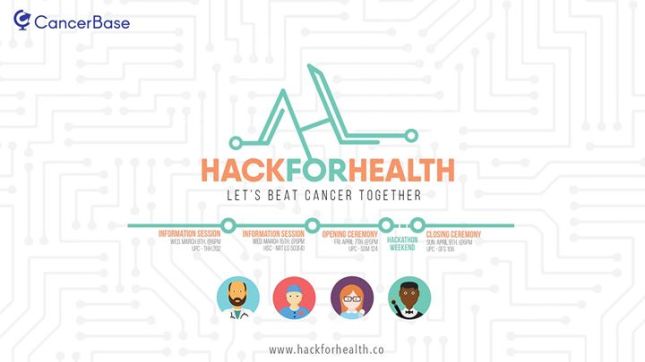
After a successful trip to the American Association of Cancer Researchers conference in Washington last April, Lori came home to Los Angeles to participate in the Hack for Health at USC. This was part of the Cancer Base project and Lori was incredibly proud of the work that the students did that weekend as well as the amazing work of her colleagues at the Kuhn Lab. Her last Blog post was about this event. She was physically exhausted by the event and was also emotionally energized by the students and their desire to build something to actually help patients. I went with Lori to the final session and was so impressed by the hard work the students put into their project and how they really keyed in on things that could help cancer patients and their families.
About a week after the hackathon, Lori was in a lot of pain. I took her to her doctor and/or to the emergency room to get some type of pain relief several times. She was in and out of the hospital between April and the end of July. We learned that the cancer was spreading in her abdomen and the various chemotherapies were not working. She got sicker and weaker in April, May and June. But, it wasn’t a straight-line progression. We had some good times too.
Last June, Lori was able to sit in the audience and watch our son Zach deliver an amazing and inspiring commencement address and graduate from high school. (When she was first diagnosed with cancer – and our son was only three – Lori didn’t believe she would ever see him go to high school, let alone watch him graduate and speak in front of the graduating class.) Later in June, Lori had a blood transfusion and she and her doctor felt she was strong enough to travel on an Alaskan cruise. We flew up to Seattle (where we happened to be able to see my sister and our nephews and niece-in-law) and then went on a week-long cruise as a family. We had dinner together every night, visited the ports, watched the shows and even took a helicopter to the top of a glacier outside Juneau. Lori was weak so we were careful about what we did, but Lori was full of life and showered Zach and me with her love. She even got to see fireworks in Victoria, British Columbia as we were there on the 150th Canada Day. Lori always found fireworks to be particularly thrilling.
When we got home from Alaska, Lori had a doctor’s appointment but was not feeling well enough to go. The doctor suggested she go to the emergency room so she could quickly get a set of scans. We learned then that the cancer had “taken off” and was now literally everywhere in her body – including in her brain. While the fact that the cancer spread to her brain was terrifying, at the time, we were more concerned about the spread to Lori’s lungs as she was having difficulty breathing. But, as you probably know, Lori was a trooper and we just worked through each problem until we could find a solution. When the dust settled, here is what Lori wrote to several friends after a doctor’s appointment a few weeks before she died:
It’s been a hell of a day. Most of it was spent in medical offices and then taking my mom to the airport. We learned a lot today, so here we go . . .
Our first stop was the pulmonologist and focused on breathing. Breathing is good! And right now, mine is labored and compromised because of the fluid accumulating in the lining around my lungs. This is a result of growing cancer and will be resolved, hopefully, this week. They will drain most of the fluid and leave essentially a port that John can drain daily. That should work for a little while and allow me to not use the oxygen tanks and concentrator I use now quite as much. This will be primarily a palliative fix as the underlying cause of the fluid (which puts pressure on my lungs and makes breathing hard) is the cancer.
Next stop was the oncologist, where she confirmed what we understood already: the cancer is beginning to move more quickly through my body. It’s in the fluid that surrounds my brain which essentially means that it has spread to my brain. I will start a new treatment within the next few days. This is an oral chemotherapy called lapatinib.
There will probably be more changes like the already added oxygen tank. We’re discussing getting a walker and a hospital bed — things that will “make it easier” and which are also emotionally devastating. Who wants to be that girl, right?
Right now, I’m feeling a bit clumsy and wobbly. That should improve somewhat after the lung procedure but I will continue to have side effects because the cancer is just “out and about” throughout my entire body. I think we each asked our dreaded questions: Zach about deferring school, John about whether the new treatment would work and what we now define “work” to mean. Mine was whether “that time” had arrived. And it has. It’s time for me to put final pieces in place and have out-of-towners come in if they want to say goodbye while I’m still well.
We all remain shell-shocked. We are so grateful for the calls and notes that are sent with so much love. Unfortunately, there is just no way for me to keep up right now. I hope I can catch up tomorrow. I hope you can forgive my tardiness.
Please know we appreciate how blessed we are to have you in our lives, how grateful for your understanding as we pass the next set of hurdles, and how lucky for so many years of friendship. For each message and email, thank you — from the very bottom of our hearts — thank you.
After this email, things did get worse. It took about 10 days to get the drug she was describing. In fact, it was the first time I had a dispute with the insurance company about anything related to Lori’s cancer and the first time I put my “lawyer” hat on to fight. Lori was just tired. She told some friends (who later told me) that she feared that Zach and I (her “guys”) would think she was a “quitter” because she was not only losing the fight – but more importantly she was also losing the will to fight. I wish she had told us because nothing could be further from the truth. She was brave and her struggle with cancer was profound. Zach and I couldn’t be prouder of how she handled all of it – the beginning, the middle and, unfortunately, the end.
Shortly after starting the drug, Lori fell at home and began having serious memory and cognitive issues. We didn’t get a hospital bed until she started hospice in late July. We tried to keep her comfortable and many friends and family did stop by during those last weeks before she died. She wanted to be more in touch with her Blog and felt bad she didn’t update it, but she just couldn’t do it any longer. Hospice was hard on Lori’s parents, Zach and me but I think Lori was relatively peaceful. Lori’s 51st birthday was a few days before she died and the last food she ate with intent was her Viktor Benes Chocolate Parisian birthday cake (her favorite). She was a little out of it at the time but insisted that everyone – her parents, her friends, the caregiver, Zach and me – take a moment to celebrate the miracle of just being alive and enjoy the sweetness of the chocolate cake. Even as we knew she had only days to live, we sang happy birthday and had a cake (because of the oxygen tank it wasn’t safe to have a candle, but the thought was there). We also tried to laugh and joke in the final days. Lori kept her sharp wit until just about the end – even in the last few days, that wit and snark would seep out of her during our conversations.
Lori died late in the evening on August 2, 2017. I hope most of you learned of her death through Twitter, Facebook, #BCSM or some other source. Lori’s funeral was, I think, appropriate for her. It wasn’t over the top but was a celebration of her life. We had a woman Rabbi and a woman Cantor officiate. Given Lori’s strong feminist and Jewish background, I think this was fitting. Shortly after her death, I took our son Zach to start college at American University in Washington, D.C. He’s doing well and, using the lessons his mother taught him, starting to fly on his own.

This is a picture of the stone that will be placed on Lori’s grave. While most of it is self-explanatory, I want to explain the broken candlestick. In Jewish tradition, the symbol of a candlestick is used to represent women. Women light candles at the beginning of every Shabbat, which is why that imagery has evolved. A broken candle symbolizes a woman who died young or too soon. It is also fitting because through this Blog, through her son, through her work, through her interactions with her family and friends and all that she did, Lori was a light onto this world. That light was snuffed out too soon. There is no nice way to put that because, as Lori knew all too well, cancer is a merciless enemy. Now, her family, friends, colleagues and other patients need to somehow find a way to replace that glow.
I’ve been overwhelmed by the cards, letters and notes people have sent me. A life is complex and, as close as we were, I’ve learned a lot about Lori since she died. Last month, Houston Methodist Hospital dedicated a conference to Lori’s memory and other people have asked if they could do things in her name. I know she would be honored and a little perplexed at the hubbub over her death. She was humble that way. Every memory or memorial no matter how large or small is so wonderful to Lori’s whole family and me.
I can’t really explain how my life has changed. Lori and I were college sweethearts and, next month, we would have celebrated our 30th wedding anniversary. Like all couples, we had our ups and downs. We laughed. We fought. We loved. And we shared our lives – the good, bad and, unfortunately, the hideously ugly. Lori made me promise her that, after her death, I would continue to live a life and not spend the rest of my life mourning her loss. I’m learning to do that. Its neither what I wanted nor expected, but as Lori would say, it is what it is. Fortunately, I have incredibly supportive family, friends and colleagues who are helping me in small and large ways every day. I’ve changed jobs, attended some groups and even made new friends who also help me. While I’m very sad and a bit adrift right now, I certainly don’t feel like I’m alone.
While it’s hard to speak for her, I think Lori would want you to continue to support positive breast cancer advocacy groups such as the Dr. Susan Love Research Foundation and Breast Cancer Action. She would ask you to support the California Breast Cancer Research Foundation and Cancer Base. She would tell you to “pink responsibly” every October and remember that 30% of breast cancer will become metastatic and that is the cancer that kills. She would say we need research and we need a cure. She knew – deep in her bones – that the work she was doing was unlikely to help save her own life. She also knew that the work could help the next generation of sisters, daughters, grand-daughters and friends. She would hope that her family would be the last to have to go through this ordeal. If you are still in the fight yourself, she would encourage you to fight for and treasure, as she did, every valuable moment you can grab with your family and friends.
I don’t plan to continue this blog but I felt that something needed to be said to close it out. Thank you all for your support for Lori and her advocacy over the years. This blog was quite cathartic for her and she felt a responsibility to those of you who read it. It helped her get up every morning and fight cancer literally for years – long after the life-expectancy tables said she should have died.


 I know, I know…I’ve been quiet again. Here’s the thing – when I’m quiet it’s almost always good news. I’m feeling well, and my treatments are manageable and my tumor markers seem to be dropping. I’m engaged in family, advocacy and real life. I just finished watching the presidential debates, and tonight my concern for our country rises above my concern for breast cancer. Right now I’m juggling @

 Two weeks ago I woke up with a blog post half written. Well, sorta woke up – I dozed my way through most of the night. But once my eye were open enough to read my email, I got sidetracked by this:



 regrounding
Recent Comments